Protect your home with a professionally installed termite barrier. We use Termidor, Biflex, HomeGuard, and Termimesh systems — each tailored to your property and compliant with Australian Standard AS3660.
Tell us about your property and we'll get back to you promptly.
AS3660
Compliant Treatments
Termidor
Accredited Applicator
Licensed
& Fully Insured
Certificate
of Treatment Issued
What Is a Termite Barrier?
A termite barrier is a zone of protection installed around and beneath a building to prevent subterranean termites from entering the structure undetected. There are two main types: chemical barriers and physical barriers.
Chemical barriers use soil-applied termiticides — such as Termidor or Biflex — to create a treated zone that termites encounter as they forage from their underground nests. Physical barriers, such as HomeGuard membrane or Termimesh stainless steel mesh, create a tangible obstruction that forces termites to surface where a trained inspector can detect and treat them.
Both approaches comply with Australian Standard AS3660, and both are used by Melbourne Termite Control depending on your property's construction type, age, and risk profile.
Barrier Systems We Install
We install and service chemical and physical termite barriers across Melbourne. Each system is selected to suit your property's construction type, soil conditions, and long-term protection needs.
Termidor SC
Chemical
Australia's most trusted termiticide. A non-repellent liquid applied to soil around your property perimeter. Termites cannot detect it — they pass through the treated zone and carry the active ingredient back to the colony, eliminating it at the source.
A bifenthrin-based liquid termiticide forming a continuous treated soil zone. Highly effective in Melbourne's clay-heavy soils. Provides fast knockdown and long residual protection.
Best for
Soil treatment, perimeter barriers, subfloor areas
Typical duration
5–8 years
HomeGuard Termite Barrier
Physical
A physical barrier membrane installed during construction beneath slabs and around service penetrations. HomeGuard acts as a physical shield, forcing termites to surface where they can be detected and treated — no chemical active ingredient required.
Best for
New construction, pre-construction protection, AS3660 compliance
Typical duration
Lifetime of building
Termimesh
Physical
A stainless steel mesh barrier installed around pipe penetrations, along slab edges, and at expansion joints. The fine mesh openings are smaller than termite bodies, creating a permanent physical barrier that requires no re-treatment.
Best for
Service penetrations, slab edges, expansion joints
Typical duration
Lifetime of building
Chemical vs Physical Barriers: At a Glance
Feature
Chemical
Physical
Suitable for existing homes
Suitable for new construction
AS3660 compliant
Requires re-treatment
Certificate of Treatment issued
Works without chemicals
Non-repellent (Transfer Effect)
Permanent physical protection
Not sure which system suits your property? and we'll advise you.
Pre-Construction and Post-Construction Barriers
Pre-Construction
Installed during the building stage, before concrete is poured. Physical barriers such as HomeGuard membranes are laid under slabs and around pipe penetrations. This is the most cost-effective method as access is straightforward and the system integrates cleanly with the structure.
HomeGuard perimeter sheeting
Termimesh at service penetrations
Chemical treatment under slab
AS3660.1 compliant
Post-Construction
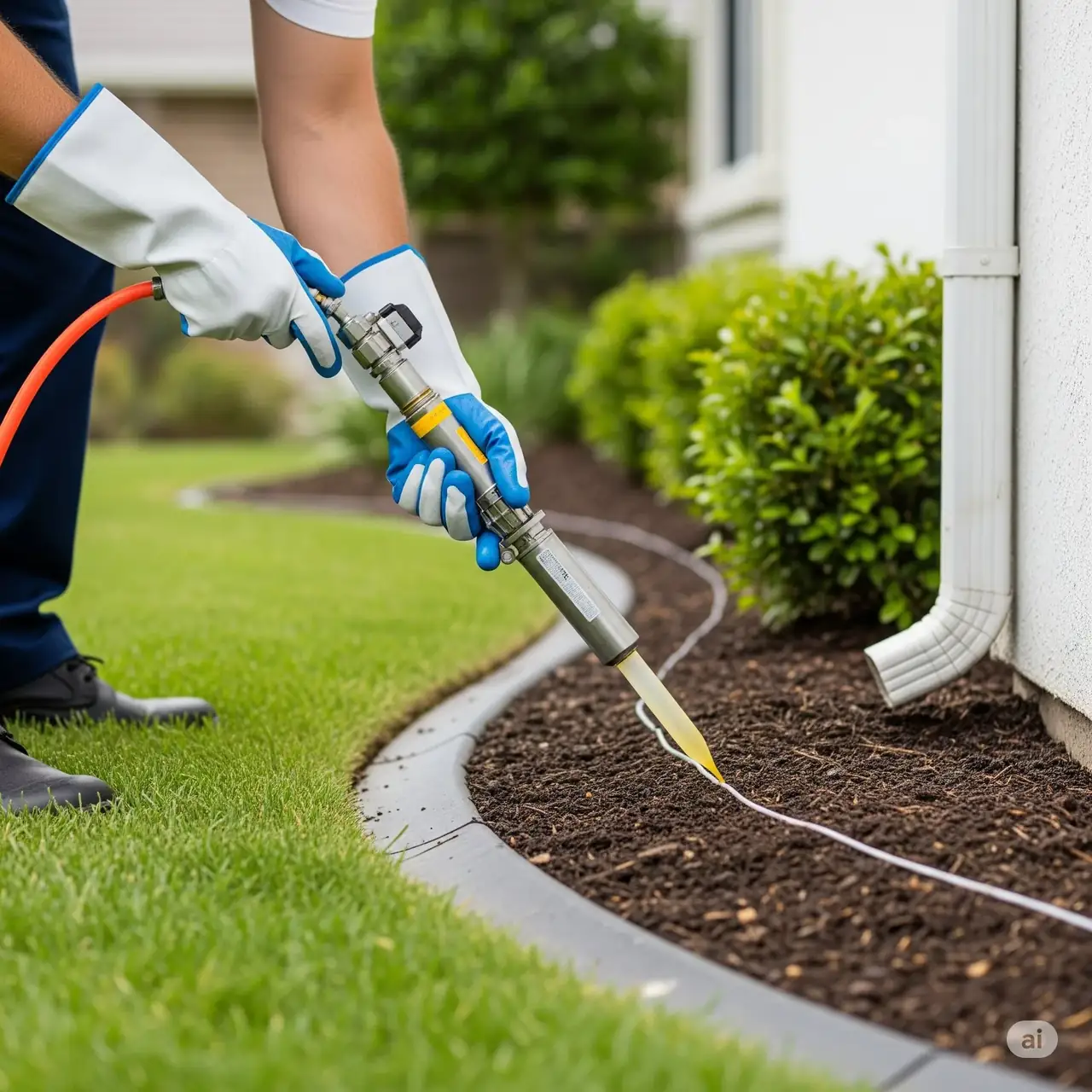
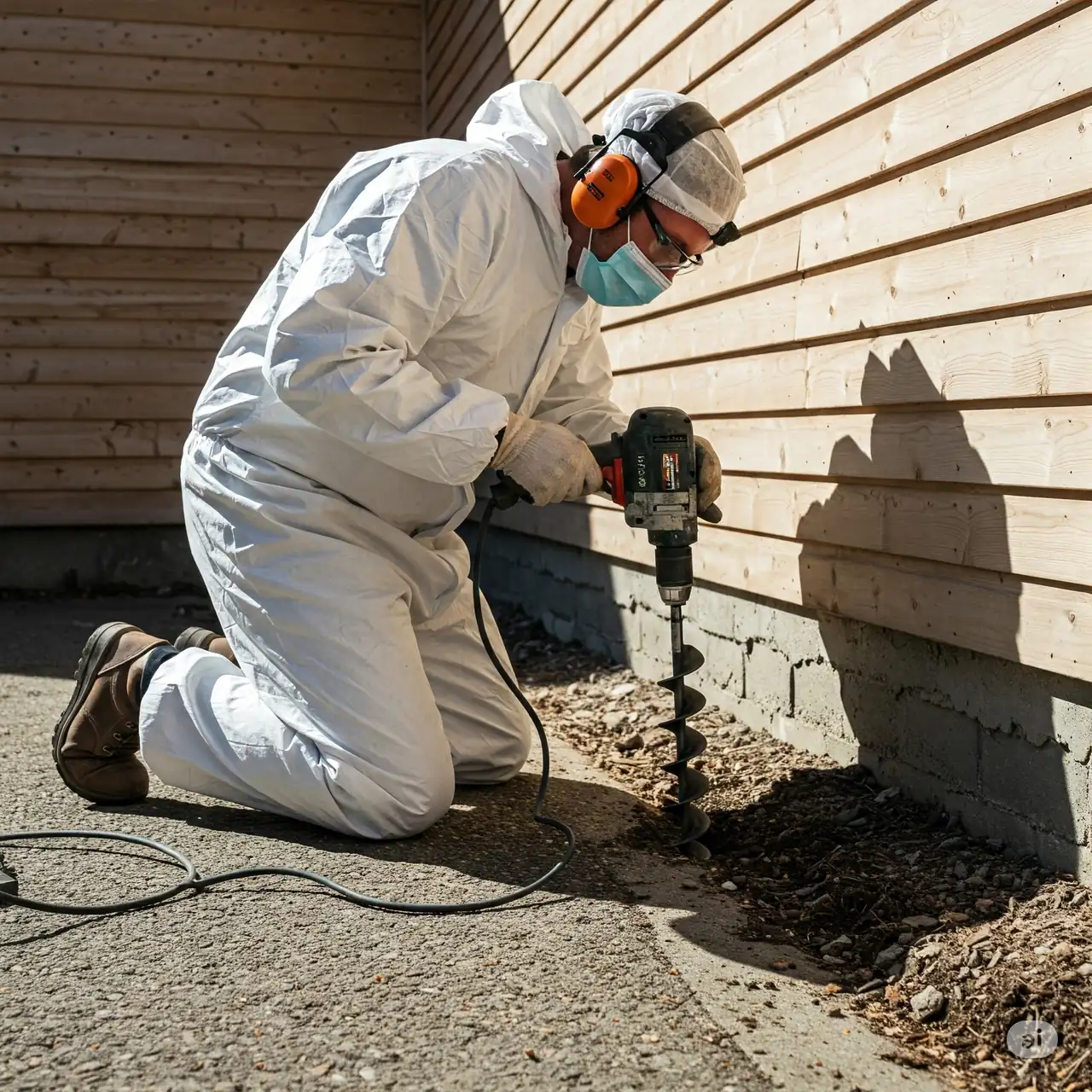
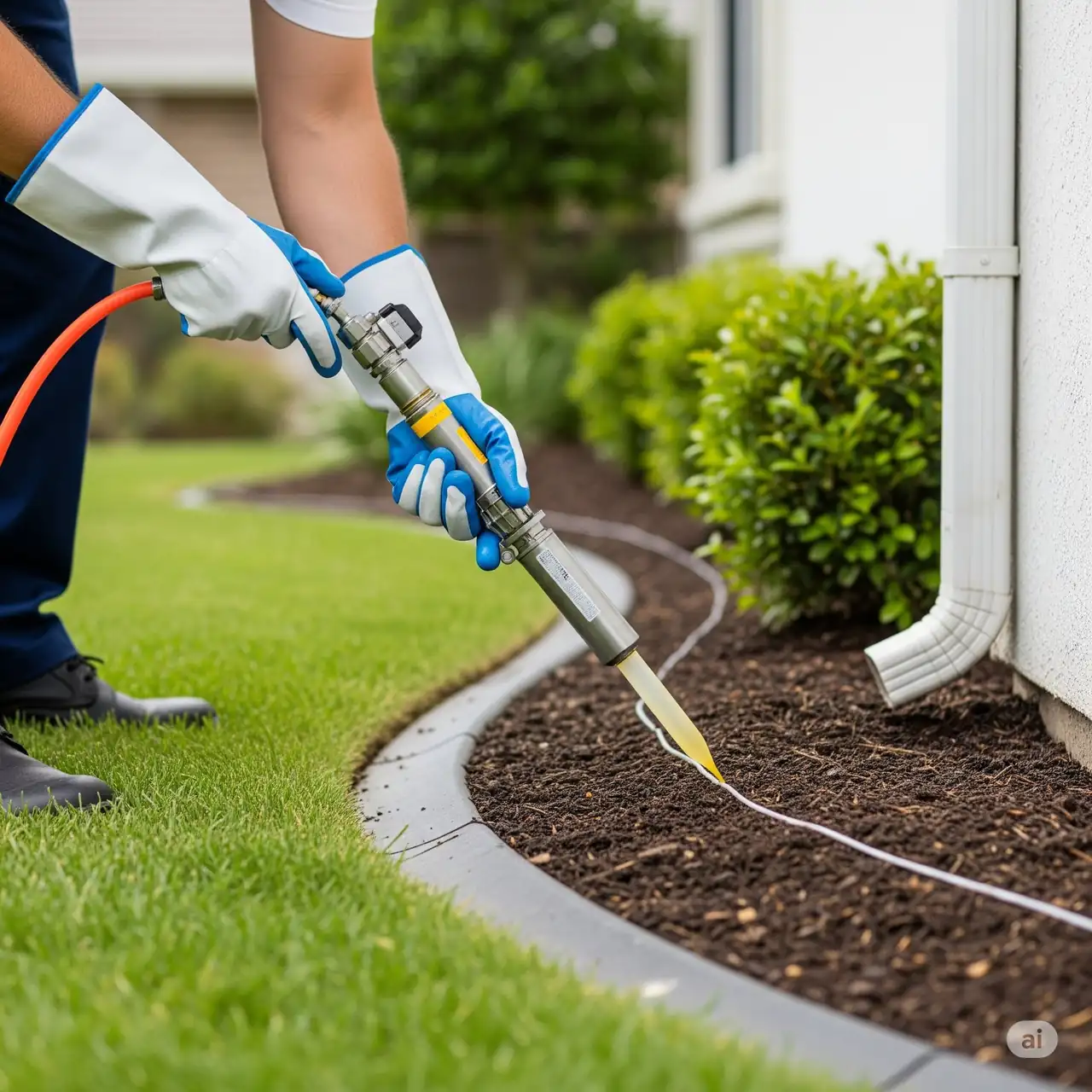
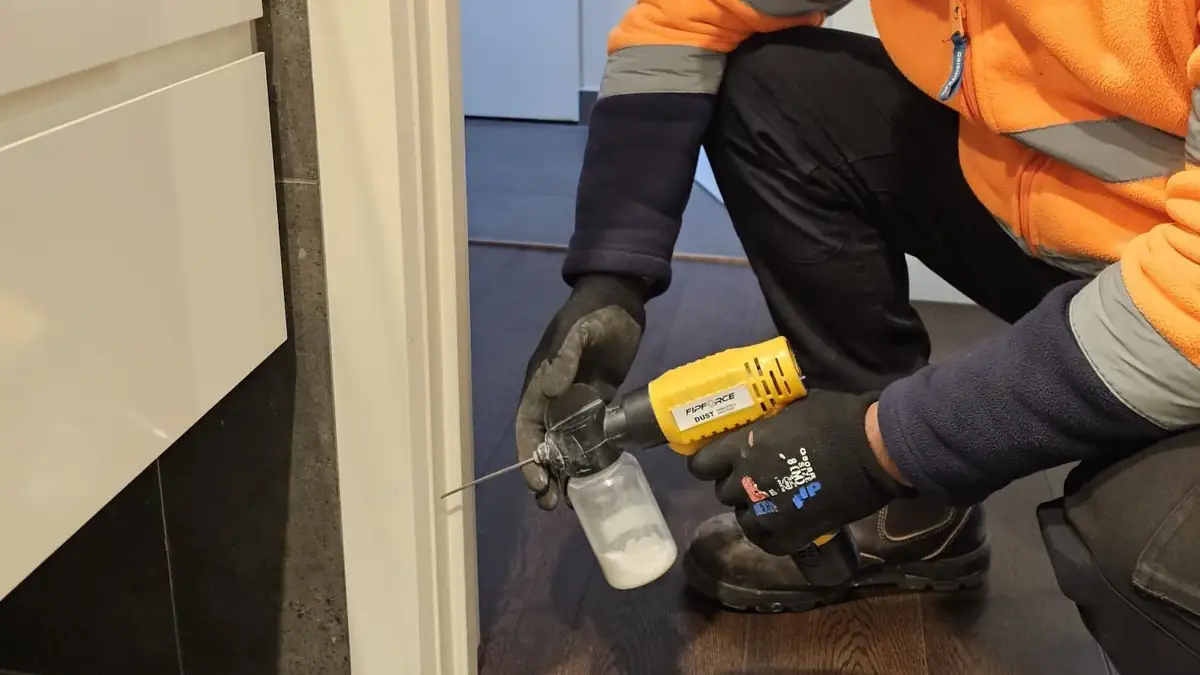
Applied to existing buildings after construction. Chemical soil treatment is the primary method — termiticide is injected through drilled holes in concrete, applied to exposed soil in subfloor voids, and distributed via trenches around the external perimeter.
Termidor or Biflex soil treatment
Concrete drilling and injection
Subfloor void treatment
AS3660.2 compliant
How We Install Your Termite Barrier
Every installation follows a structured process to ensure complete protection, correct documentation, and long-term effectiveness.
1
Site Inspection
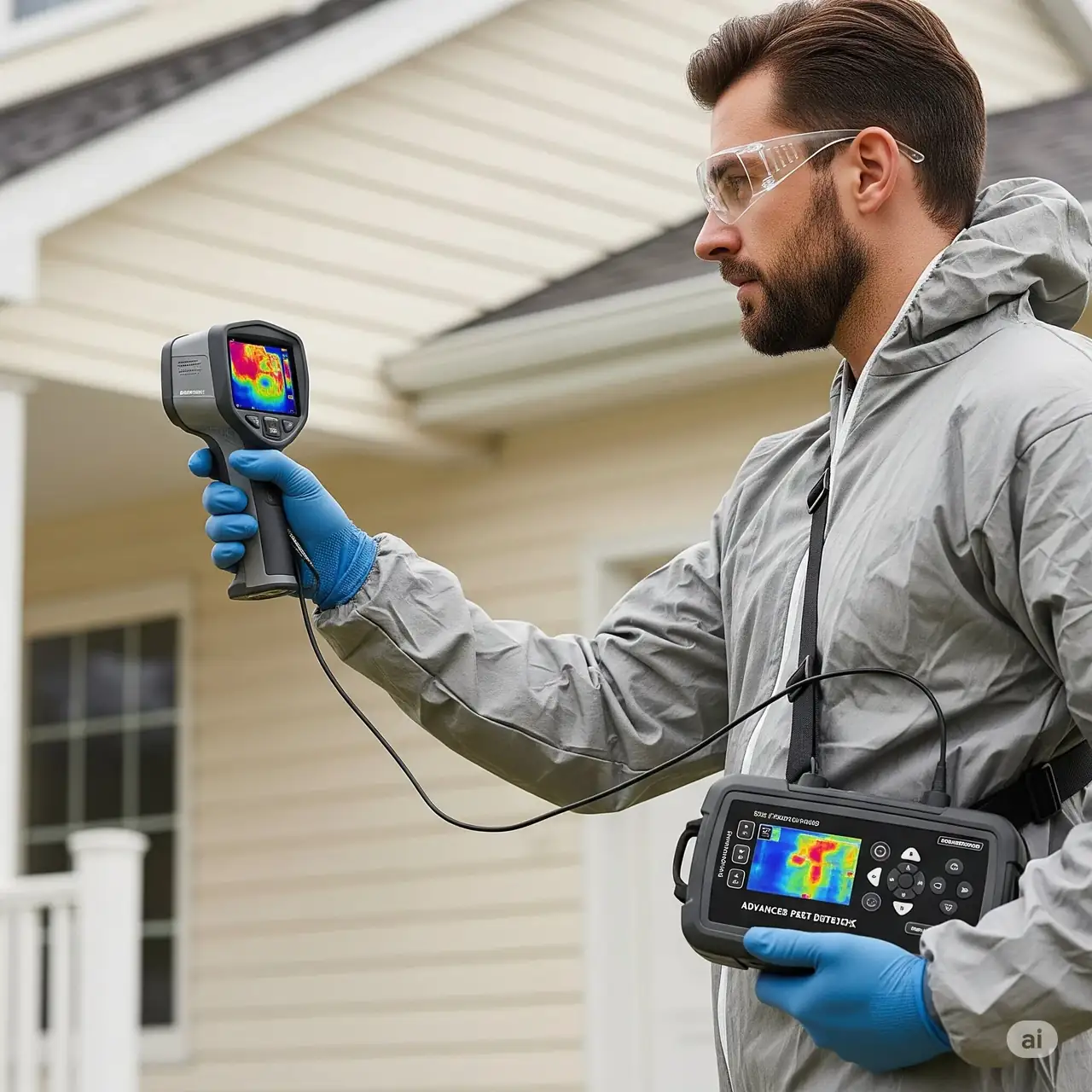
A licensed technician conducts a thorough inspection of your property to identify existing termite activity, assess soil conditions, and determine the most effective barrier type for your home.
2
Treatment Plan
We prepare a written treatment plan detailing the barrier type, application zones, chemical product, and expected protection outcomes — in line with Australian Standard AS3660.
3
Preparation
The perimeter is prepared — trenches are excavated where needed, concrete drilled for injection points, and soil conditioned in heavy clay areas to ensure even chemical distribution.
4
Barrier Application
Termiticide is applied to the soil at the required rate and depth, creating a continuous treated zone around and beneath the structure. Physical barriers are installed at all designated entry points.
5
Documentation
A Certificate of Treatment is issued, documenting the barrier type, chemical used, application rates, and warranty details. Required for insurance and property sale purposes.
6
Annual Inspections
An annual termite inspection is required to maintain warranty validity and ensure the barrier remains intact. Our team will alert you if conditions change or reinforcement is needed.
Why Termidor Remains the Leading Choice
Termidor SC is Australia's most-used termiticide for a reason. Its active ingredient, fipronil, is non-repellent — termites cannot detect it in the soil, so they pass through the treated zone without avoiding it. As they do, they pick up a slow-acting lethal dose.
The critical advantage is Termidor's Transfer Effect: affected termites carry the active ingredient back to the colony before dying, spreading it to nestmates through grooming and feeding. This colony-wide transfer achieves more complete and lasting elimination than any repellent chemical can deliver.
As accredited Termidor applicators, Melbourne Termite Control installations are eligible for the Termidor Assurance Warranty — covering your home for structural termite damage up to $2 million for eight years.
Chemical Termite Barrier — Frequently Asked Questions
What is a chemical termite barrier?
A chemical termite barrier is a treated zone of soil around and beneath a building's foundation, created using APVMA-approved termiticides such as Termidor or Biflex. The barrier works by either repelling termites or — in the case of non-repellent products like Termidor — killing them through contact and transfer as they forage through treated soil. It is one of the most widely used termite protection methods for existing Melbourne homes.
What is the difference between a chemical barrier and a physical barrier?
A chemical barrier uses liquid termiticide applied to soil to create a treated zone that termites must pass through to reach the structure. A physical barrier — such as HomeGuard or Termimesh — is a physical material installed during construction to block termite entry paths. Many Melbourne properties use both: physical barriers in new builds for long-term protection, with chemical treatments applied post-construction to supplement or replace protection over time.
How long does a chemical termite barrier last?
Product lifespan varies by termiticide. Termidor SC provides up to 8 years of protection in normal soil conditions. Biflex Ultra typically provides 5–8 years. Soil type, rainfall, and construction activity can affect barrier integrity over time. Annual inspections are required to monitor effectiveness and maintain any product warranty.
Is Termidor safe for my family and pets?
Yes. Termidor and other registered termiticides are APVMA-approved and applied according to strict manufacturer and AS3660 guidelines. The active ingredient is applied underground at low concentrations. Once the soil has dried and the treatment area is backfilled, the risk to people and pets from surface contact is negligible. Your technician will advise on any specific re-entry precautions for treated areas.
Do I need a termite barrier for a new build?
Yes. Under the National Construction Code (NCC) and Australian Standard AS3660.1, all new residential buildings in Victoria require a compliant termite management system. Physical barriers such as HomeGuard or Termimesh are typically installed during construction at the slab stage. If a chemical-only approach is used, it must meet the same standard. Builders are required to provide a Certificate of Treatment at handover.
Can a chemical barrier be installed in an existing home?
Yes. Chemical soil treatment is the most common method used to protect existing Melbourne homes. It involves drilling concrete paths, pavers, and slabs at regular intervals, injecting termiticide to the correct depth and volume, then sealing the drill holes. The process is carried out under Australian Standard AS3660.2, which governs management of subterranean termites in and around existing buildings.
What does AS3660 mean for termite barriers?
AS3660 is the Australian Standard for the management of subterranean termites. It has two parts: AS3660.1 (new buildings) and AS3660.2 (existing buildings and structures). Any termite barrier installed by a licensed technician in Victoria must comply with the relevant part of this standard. Compliance ensures correct product use, application rates, and documentation — and is required for warranty claims and insurance purposes.
How much does a chemical termite barrier cost in Melbourne?
Cost depends on property size, construction type, soil conditions, and the product used. A standard chemical soil treatment for a typical Melbourne home starts from around $1,200–$2,500. Properties on concrete slabs or with complex footing designs may require more drilling and material. Contact us for a site-specific quote — we provide written, fixed-price assessments.
What Melbourne Homeowners Are Saying
With over 1,800 verified Google reviews and a perfect 5.0 rating, Melbourne Termite Control is one of the most trusted termite specialists in Victoria. Here's what some of our customers have to say.
Contacted Melbourne Termite Control for a termite issue and from the first contact through to completion of the work they are one of the most professional companies I have dealt with. Very happy with the outcome and highly recommend them.
S
Simon Khoo
9 July 2024
Excellent service from the Melbourne Termite Control team especially Peter and Troy and the in office staff. We have been with the company for over 5 years and they always deliver outstanding results. Highly recommended.
A
Andrea C.
14 June 2024
I have been a MTC customer for many years. Having rid the house of the buggers annual inspections are all I have since required. Tom has always been right on time, thorough and professional. Great peace of mind.
M
M M
23 July 2024
Contacted Melbourne Termite Control for a termite issue and from the first contact through to completion of the work they are one of the most professional companies I have dealt with. Very happy with the outcome and highly recommend them.
Chemical Barrier Treatment
Termite Chemical Barrier Treatment in Melbourne
Finding termites in your home is one of those moments that makes your stomach drop. One day everything looks fine,
and the next you're staring at hollow skirting boards or mud tubes creeping up your brick wall. If you've reached
this page, chances are you're already worried about termite damage, or you want to make sure it never happens in
the first place. Either way, a termite chemical barrier treatment is one of the most reliable ways
to protect your property from these silent destroyers.
At Melbourne Termite Control, we've spent years helping homeowners across Melbourne deal with termite problems the
right way, not with quick fixes that wear off in a few months, but with proper barrier systems that actually hold
up. This page will walk you through what a termite chemical barrier treatment involves, why it works, and why it's
worth doing properly the first time.
6 min read · 7 topics
Up to 8 years
Barrier protection
What Is a Termite Chemical Barrier Treatment?
A termite chemical barrier treatment is a preventative and curative pest control method where a specially formulated
termiticide is applied around and beneath your property. The idea is simple. Termites travel through soil to reach
the timber in your home, so if you create a treated zone they can't cross without picking up the chemical, you cut
off their access entirely.
Modern termiticides used in a termite chemical barrier treatment aren't repellent poisons that just push termites
away to find another entry point. Most products we use today are non-repellent, meaning the termites don't even
detect the chemical. They walk straight through it, carry it back to the colony on their bodies, and it spreads to
other termites through grooming and contact. Over time, this can significantly reduce or eliminate the colony
feeding near your home.
Why Melbourne Homes Are Particularly at Risk
Melbourne's mix of older weatherboard homes, brick veneer builds, and newer developments creates a wide range of
conditions that termites find appealing. Clay soils that retain moisture, timber retaining walls, and garden beds
sitting close to foundations all give termites easy access points.
We've walked into homes in the outer suburbs where a termite colony had been feeding on structural timber for over a
year without the owners noticing a thing. Termites are experts at staying hidden. They avoid light and open air,
which is exactly why a termite chemical barrier treatment needs to be installed correctly around the entire
perimeter and any vulnerable entry points, not just the obvious spots.
This is also why regular termite inspections in Melbourne matter so much.
Catching activity early, before it becomes a full colony problem, makes treatment far more effective and far less
costly.
How the Treatment Process Works
1
Property Inspection
Before any treatment begins, our licensed technicians carry out a full property inspection. We check the soil
type, drainage, construction style, and look for any existing termite activity or damage. This step matters
because every home is different, and a barrier that works well for a brick home on a concrete slab won't
necessarily suit a timber-stumped Victorian cottage.
If you're buying a new home, this is also the ideal time to arrange a
pre-purchase inspection in Melbourne, so you know exactly what you're
walking into before signing anything.
2
Choosing the Right Termiticide
There are several termiticide products on the market, and picking the right one depends on your soil conditions
and the layout of your property. Some products bond tightly to clay soils, while others are better suited to
sandy conditions. We match the chemical to your specific site rather than using a one-size-fits-all approach.
3
Application Around the Perimeter
The termiticide is applied in a continuous line around the external walls of the building, along with any
internal areas where termites could potentially enter, such as expansion joints, plumbing penetrations, or weep
holes. For a termite chemical barrier treatment to actually work, there can't be any gaps. Termites only need a
small opening to slip through undetected.
4
Treating Under Slabs and Around Structures
For homes on concrete slabs, we drill small holes at set intervals and inject the termiticide beneath the slab to
create a complete barrier underneath the building, not just around the outside edges. This step is often
overlooked by less experienced operators, but it's one of the most important parts of the job.
For homeowners who want ongoing, long-term protection built into the property itself, we also offer
termite reticulation system installation, which allows future
re-treatments to be carried out without digging up garden beds or pathways.
Junctions, penetrations and expansion joints get treated directly, so the barrier has no gaps for termites to slip through.
DIY Termite Treatments vs Professional Barrier Systems
We understand the appeal of grabbing a termite spray from the hardware store and dealing with it yourself. It seems
cheaper and faster. But here's the problem. Store-bought products are usually repellent-based, meaning they just push
termites sideways to another part of your foundation instead of dealing with the colony.
We've been called out to homes where a DIY treatment was applied a few months earlier, and the termites had simply
moved a metre along the wall and found a new way in. The damage was often worse because the homeowner assumed the
problem was solved.
A professional termite chemical barrier treatment uses commercial-grade termiticides that aren't available to the
general public, applied at the correct concentration and depth required by Australian Standards. This isn't about
scaring you into paying for a service. It genuinely comes down to the fact that termite colonies can contain hundreds
of thousands of individuals, and a partial treatment rarely stops them.
Benefits of a Professional Termite Chemical Barrier
Long-lasting protection
Depending on the product used and site conditions, a properly installed barrier can protect your home for up to 8 years.
Whole colony impact
Non-repellent termiticides don't just block entry, they can affect the wider colony through transfer between termites.
Compliance with Australian Standards
Our treatments follow AS 3660, which matters for insurance purposes and if you ever sell your property.
Peace of mind
Once the barrier is installed, you're not lying awake wondering what's happening behind your walls.
Protect your investment
For most people, their home is their largest asset. A termite infestation left untreated can lead to tens of thousands of dollars in structural repairs.
Signs You Might Already Need Treatment
Some homeowners come to us after noticing warning signs, while others prefer to act before there's any activity at
all. Common signs that suggest you shouldn't wait include:
Mud tubes running up external walls or timber stumps
Timber that sounds hollow when tapped
Doors or windows that suddenly stick for no clear reason
Small piles of what looks like sawdust near skirting boards
If you're noticing any of these, it's worth booking a proper inspection sooner rather than later. Termite damage
tends to accelerate once a colony has established a strong feeding path into your home.
Why Choose Melbourne Termite Control
We're a locally operated termite control Melbourne team that understands the city's soil types,
building styles, and termite species better than a national call centre operation ever could. Every termite chemical
barrier treatment we carry out is tailored to the actual property in front of us, not a generic checklist.
Our technicians are fully licensed and insured, and we take the time to explain what we're doing and why, rather
than leaving you with a report full of jargon. We also stand behind our work with warranties on our treatments, so
you're covered well after the job is finished.
Termite control isn't something you want to leave to chance, or hand over to someone unfamiliar with your area.
We've built our reputation on getting barrier treatments right the first time.
Protect Your Home Before It's Too Late
Termites don't wait around, and neither should you. Whether you've spotted early warning signs or simply want the
confidence that comes with proper protection, a professionally installed termite chemical barrier treatment is one
of the smartest investments you can make in your property.
Give our team a call today or book an inspection online, and let's make sure your
home stays termite-free for years to come.
Melbourne homes face one of Australia's highest termite risks — and the structural damage they cause is not covered by home insurance. Whether you have spotted a warning sign or simply want peace of mind, our licensed Melbourne termite specialists are ready to help. Book a same-day or next-day inspection and receive a written report with clear options — no pressure, no jargon, no surprises.