

Termite Identification Melbourne
Professional termite identification services to identify and address termite issues early. Our experienced inspectors provide thorough assessments to protect your Melbourne property.
Claim Your Free Termite Quote
Common Termite Species in Australia
Understanding the specific termite species threatening your property is crucial for effective treatment. Each species requires specialized control approaches.
SUBTERRANEAN Reticulitermes species▼
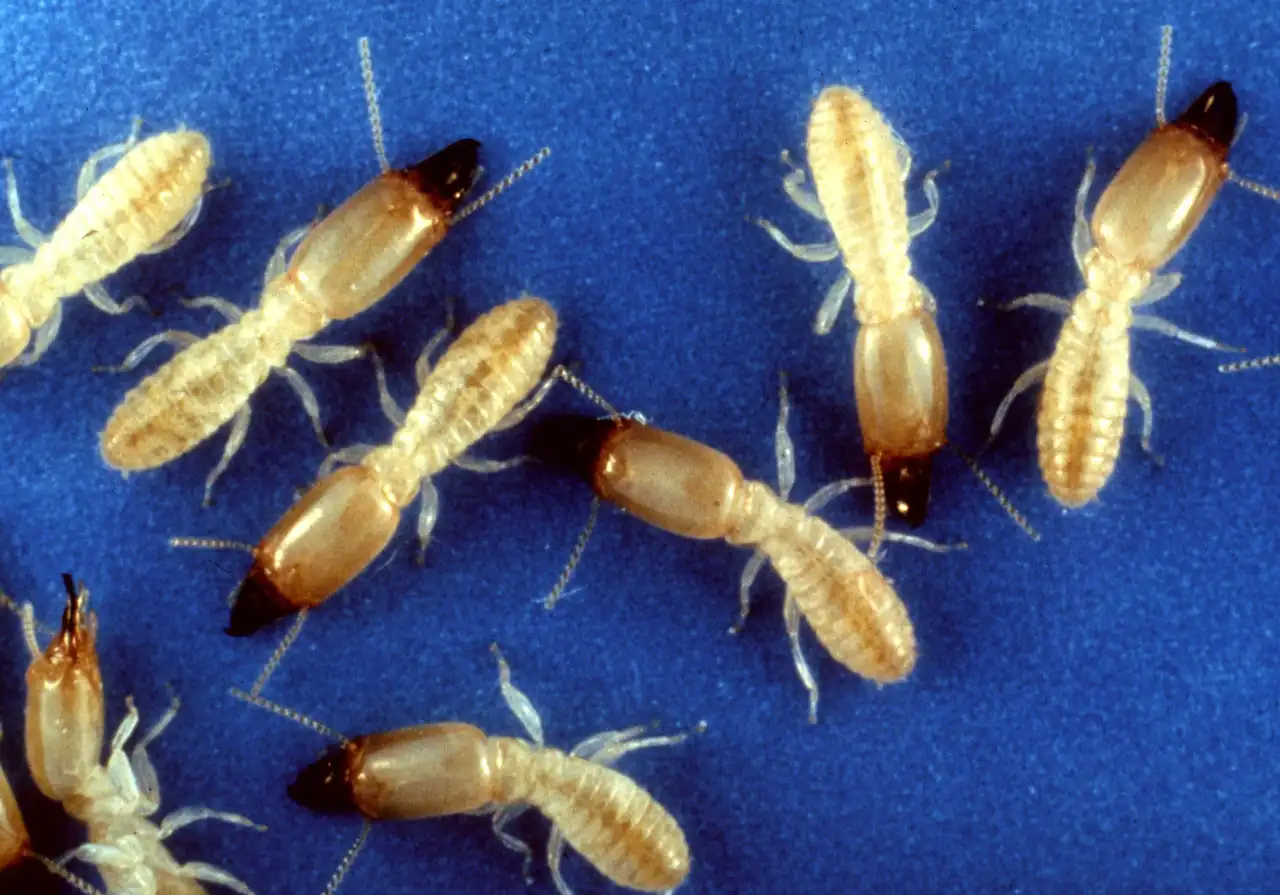
SUBTERRANEAN TERMITES
Description
Professional subterranean termite control in Melbourne targets Australia's most destructive termite species. Our comprehensive treatment systems create long-lasting barriers to protect your property investment.
Appearance
Creamy white to dark brown workers (3-4mm) with soft bodies. Soldiers have enlarged heads with powerful mandibles. Swarmers are dark brown to black with two pairs of equal-length wings that break off after swarming.
Behavior
Live in underground colonies of 60,000-1 million individuals. Build distinctive mud tubes to travel between soil and wood sources. Swarm in spring and fall, typically after rain when humidity is high.
Habitat
Require soil contact and moisture. Build extensive underground tunnel systems and mud tubes on foundations, walls, and wooden structures. Prefer softwoods but will attack any cellulose material.
Risks & Damage
Cause 80% of termite damage in Australia. Can consume structural timbers rapidly, leading to costly repairs. Often remain undetected until significant damage occurs. Annual damage costs exceed $1.5 billion nationally.
DRYWOOD Cryptotermes species▼
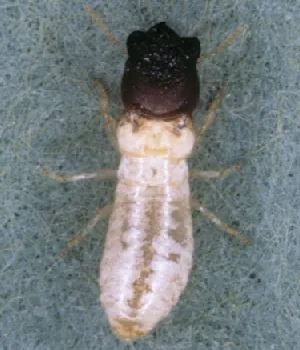
DRYWOOD TERMITES
Description
Specialized drywood termite treatment in Victoria eliminates these wood-boring pests that infest structural timbers without soil contact. Our targeted approach protects valuable wooden assets.
Appearance
Larger than subterranean termites (6-12mm), with harder bodies ranging from cream to light brown. Soldiers have large, dark heads with prominent mandibles. Produce distinctive hexagonal fecal pellets.
Behavior
Form smaller colonies (1,000-2,500 members) entirely within wood. Don't require soil contact or external moisture. Swarm during warm, dry periods, often in late summer or early fall.
Habitat
Infest dry, sound wood including furniture, flooring, structural beams, and window frames. Prefer hardwoods but will attack softwoods. Common in attics, wall voids, and wooden fixtures.
Risks & Damage
Difficult to detect until extensive damage occurs. Create hollow galleries within wood, weakening structural integrity. Damage often discovered during renovations or when wood fails under stress.
DAMPWOOD Porotermes species▼
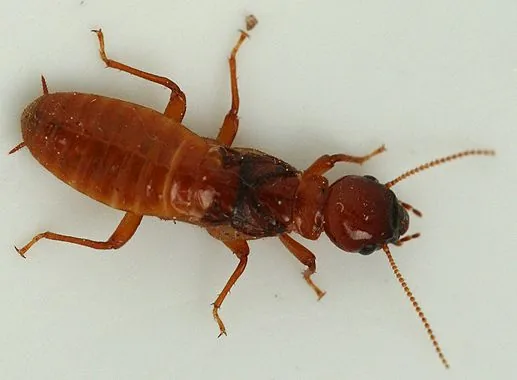
DAMPWOOD TERMITES
Description
Expert dampwood termite management in Melbourne addresses these moisture-loving pests that indicate underlying water problems. Our approach combines termite control with moisture management.
Appearance
Largest termite species (up to 20mm), with robust bodies ranging from cream to reddish-brown. Soldiers have massive heads and powerful mandibles. Workers are notably larger than other termite species.
Behavior
Form moderate-sized colonies (4,000-10,000 members) in moisture-damaged wood. Don't build mud tubes but require high moisture content. Less aggressive than other species but persistent in suitable conditions.
Habitat
Target water-damaged wood, leaky areas, and high-moisture environments. Common in basements, crawl spaces, bathrooms, and areas with plumbing leaks. Prefer softwoods with 20%+ moisture content.
Risks & Damage
Indicate serious moisture problems that can lead to mold and structural issues. While less common in well-maintained buildings, they can cause significant damage to water-compromised structures.
FORMOSAN Coptotermes formosanus▼
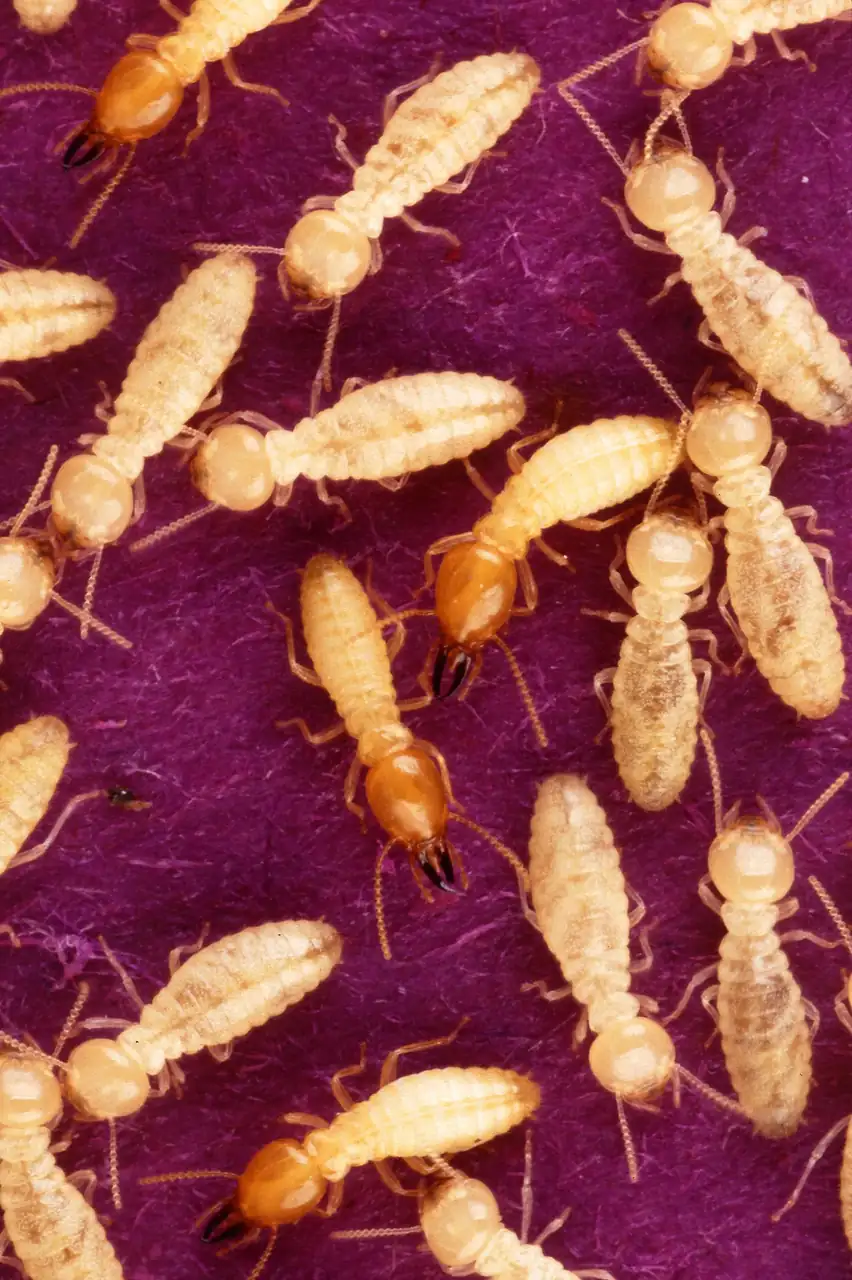
FORMOSAN TERMITES
Description
Emergency Formosan termite control in Victoria targets these 'super termites' with aggressive treatment protocols. Our rapid response prevents catastrophic structural damage from these voracious pests.
Appearance
Similar size to subterranean termites but more aggressive. Soldiers have oval heads with curved mandibles. Swarmers are yellowish-brown with hairy wings. Workers are cream-colored with slightly larger heads.
Behavior
Form massive colonies (up to 3 million members) with multiple satellite nests. Extremely aggressive feeders that can consume wood 10 times faster than native species. Build carton nests within structures.
Habitat
Highly adaptable, infesting both ground-contact and above-ground wood. Build secondary nests in wall voids, attics, and other protected areas. Can survive in drier conditions than native subterranean species.
Risks & Damage
Cause rapid, extensive structural damage due to large colony sizes and aggressive feeding. Can compromise building integrity within months. Extremely difficult to eliminate once established.
CONEHEAD Nasutitermes species▼
CONEHEAD TERMITES
Description
Specialized conehead termite control in Melbourne targets these aggressive above-ground foragers. Our comprehensive approach prevents rapid spread across your property.
Appearance
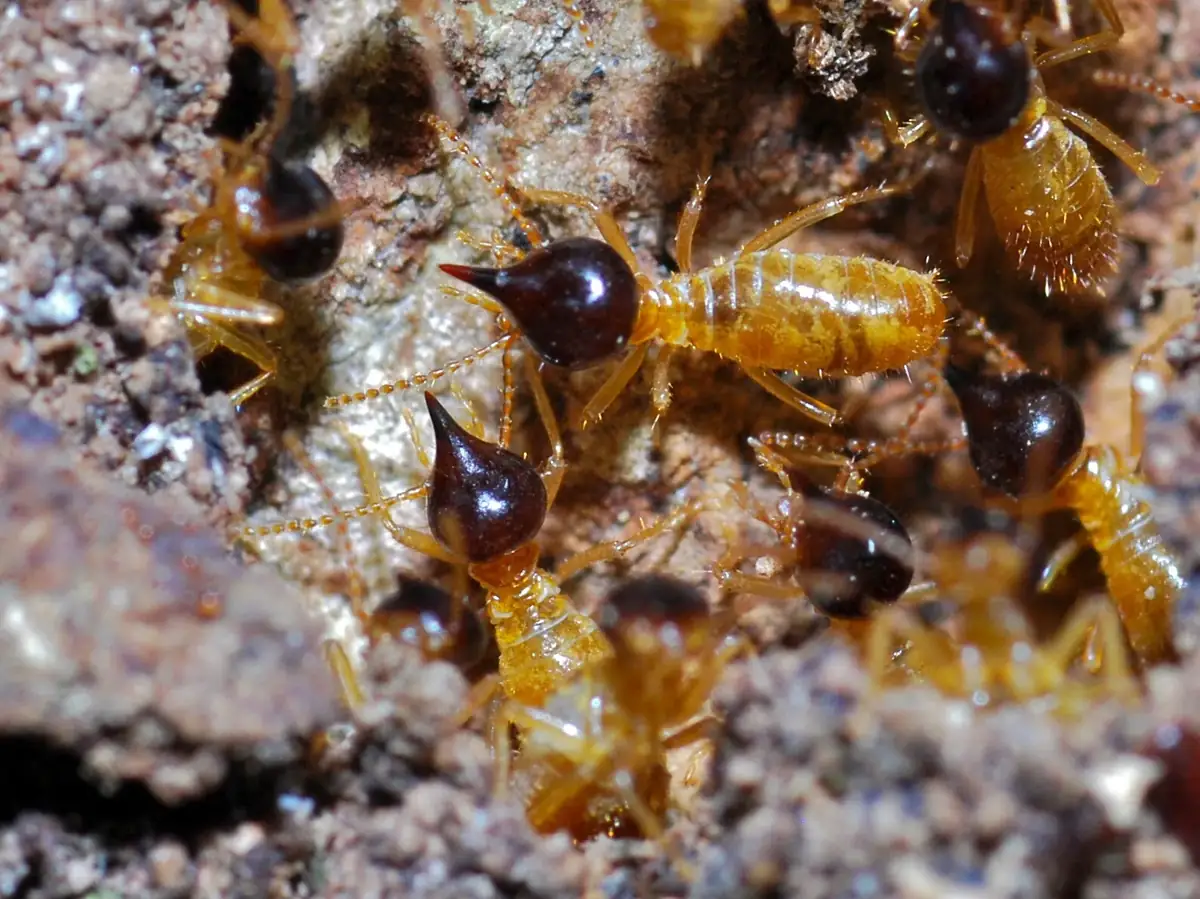
Distinctive cone-shaped heads on soldiers with pointed snouts for chemical defense. Workers are cream-colored (4-6mm). Soldiers can spray defensive chemicals up to several centimeters.
Behavior
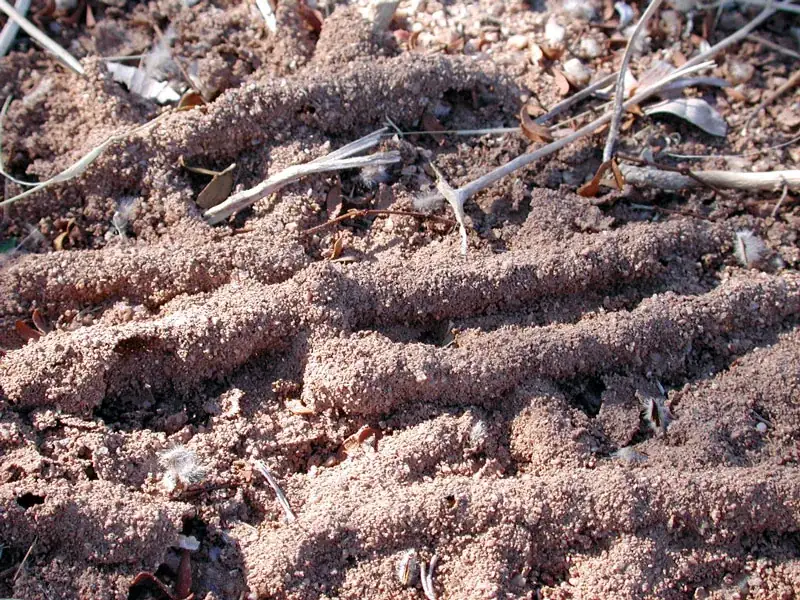
Forage above ground like ants, making them visible during daylight. Build extensive mud foraging tubes and can spread rapidly across properties. Form large colonies with aggressive expansion patterns.
Habitat
Build nests in trees, stumps, and wooden structures. Create extensive foraging networks across properties. Can attack multiple wooden structures simultaneously from central nest locations.
Risks & Damage
Rapid spread potential across entire properties. Visible foraging makes early detection possible but also indicates established colonies. Can cause widespread damage to multiple structures quickly.
DESERT Heterotermes species▼
DESERT TERMITES
Description
Professional desert termite management in arid regions of Victoria addresses these drought-adapted pests. Our specialized treatments account for their unique survival strategies.
Appearance
Small, pale termites (3-5mm) adapted to arid conditions. Soldiers have rectangular heads with strong mandibles. Workers have thicker cuticles to prevent water loss in dry environments.
Behavior
Adapted to survive in low-moisture environments. Form smaller colonies (10,000-50,000 members) but can be persistent in suitable conditions. Active during cooler, more humid periods.
Habitat
Target any available cellulose in arid environments including dead plant material, wooden structures, and paper products. Can survive in conditions too dry for other termite species.
Risks & Damage
Often overlooked due to arid environment assumptions. Can cause significant damage to wooden structures in desert and semi-arid regions. Particularly problematic during drought conditions.
What Melbourne Homeowners Are Saying
With over 1,800 verified Google reviews and a perfect 5.0 rating, Melbourne Termite Control is one of the most trusted termite specialists in Victoria. Here's what some of our customers have to say.

Contacted Melbourne Termite Control for a termite issue and from the first contact through to completion of the work they are one of the most professional companies I have dealt with. Very happy with the outcome and highly recommend them.
Excellent service from the Melbourne Termite Control team especially Peter and Troy and the in office staff. We have been with the company for over 5 years and they always deliver outstanding results. Highly recommended.
I have been a MTC customer for many years. Having rid the house of the buggers annual inspections are all I have since required. Tom has always been right on time, thorough and professional. Great peace of mind.
Contacted Melbourne Termite Control for a termite issue and from the first contact through to completion of the work they are one of the most professional companies I have dealt with. Very happy with the outcome and highly recommend them.
Book Your Service Now
Tell us what you need and we'll call you back to confirm a time. No obligation.
Expert Insights
Know Your Termites
Practical termite advice from Melbourne's licensed specialists.


Don't Wait — Act Today
Melbourne homes face one of Australia's highest termite risks — and the structural damage they cause is not covered by home insurance. Whether you have spotted a warning sign or simply want peace of mind, our licensed Melbourne termite specialists are ready to help. Book a same-day or next-day inspection and receive a written report with clear options — no pressure, no jargon, no surprises.
Available Monday – Saturday: 7:00 AM – 7:00 PM | Emergency inspections available on Sundays
Frequently Asked Questions About Termite Control in Melbourne
How much does a termite inspection cost?
A professional termite inspection in Melbourne typically costs between $280 and $500 depending on your property size, age, and accessibility. Given that termite damage can cost $10,000 or more to repair — and is not covered by home insurance — a termite inspection is one of the smartest and most affordable investments a Melbourne homeowner can make.
How long does a termite pest inspection take?
Most residential termite inspections take between 1.5 and 3 hours. Larger properties, multi-storey homes, or those with limited subfloor or roof void access may take slightly longer to ensure a thorough and accurate assessment of all areas.
Is a termite inspection really necessary?
Absolutely — and it is more urgent than most homeowners realise. Termites affect approximately 1 in 5 Australian homes every year, yet most infestations go undetected until serious structural damage has already occurred. Regular annual inspections are the only reliable way to catch termite activity early, protect your home's structural integrity, and maintain your property value.
How often should you get a termite inspection?
Australian Standard AS3660 recommends a professional termite inspection at least once every 12 months. Homes in high-risk areas, properties with a history of termite activity, or buildings with conditions that attract termites — such as moisture issues or timber-to-soil contact — should be inspected every 6 months for maximum ongoing protection.
What does your standard termite inspection include?
Our comprehensive inspections follow a proven 5-step process:
• Initial consultation — we discuss your concerns and any signs you have noticed.
• Full internal inspection — checking all accessible timber, walls, skirting boards, wet areas, and flooring.
• Advanced detection — using thermal imaging and Termatrac sensors to identify hidden termite activity.
• External inspection — examining the perimeter, fences, garden beds, garages, sheds, and all soil-contact points.
• Written report — we provide a clear inspection report with findings and tailored treatment options if activity is found.
Which areas of the property do you inspect?
We inspect all accessible internal and external areas of your Melbourne property, including:
• All interior rooms and timber structures
• Roof voids and ceiling spaces
• Subfloor and crawl spaces
• Garages, sheds, and outbuildings
• Fences, retaining walls, and garden beds
• All soil-to-wood contact points and moisture-prone zones
Every location where termites hide, travel, or gain entry is assessed thoroughly.
What technology do you use during inspections?
We use industry-leading detection tools for accurate, non-invasive termite inspections:
• Moisture metres — to locate hidden moisture and leaks that attract termites
• Termatrac termite motion detection sensors — to identify activity behind walls without drilling
• Thermal imaging cameras — to pinpoint heat and moisture anomalies indicating termite presence
• Professional probing and tapping tools — for identifying hollow or damaged timber
This combination delivers the most accurate, non-destructive termite detection available in Melbourne.
Do you offer treatment if termites are found?
Yes — and we move quickly. If we find active termites during your inspection, we will present a clear written quote for treatment options the same day. Our solutions include Termidor chemical soil barriers, termite baiting systems, localised dusting and foaming, and full nest elimination strategies — all tailored specifically to your property and the nature of the infestation.
How quickly can you inspect my property?
We offer same-day and next-day termite inspections across all Melbourne suburbs, subject to technician availability. Call us on 04 3430 0216 and we will do our best to have someone with you as quickly as possible.
Still have questions about termite control in Melbourne? We are here to help.
Call 04 3430 0216