
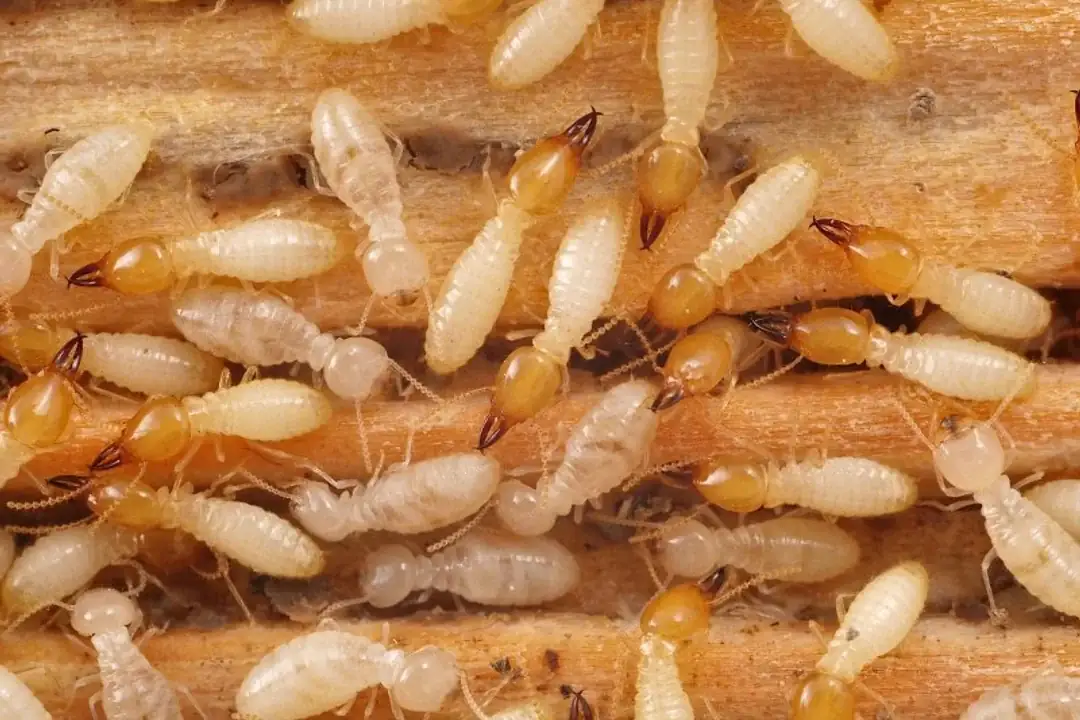
Termite Control Melbourne VIC 3000
Licensed termite inspectors and treatment specialists serving Melbourne and surrounding areas. Same-day bookings available Monday to Saturday.
Get a Free Quote
We service Melbourne — tell us about your property.
Termite Inspection & Control in Melbourne
Melbourne Termite Control provides professional termite inspections, treatments, and prevention services in Melbourne VIC 3000. Our licensed technicians serve Melbourne residents with same-day bookings available seven days a week.
Melbourne CBD and its immediate surrounds contain some of Victoria's oldest heritage buildings. The mix of Victorian-era commercial and residential structures, proximity to the Yarra River, and extensive tree canopy in parks like Treasury and Fitzroy Gardens create significant ongoing termite pressure across the central city.
If you own a property in Melbourne, an annual termite inspection is the single most important step you can take to protect your home. Our inspections follow Australian Standard AS3660 and use advanced tools including thermal imaging cameras and Termatrac devices to detect termite activity that is invisible to the naked eye.
Why Melbourne CBD buildings are at risk
The central city holds one of the oldest continuous building stocks in Victoria. Victorian and Edwardian commercial buildings along Flinders Lane, Little Collins Street and the Bourke Street retail blocks were built with hardwood floor joists, timber stud partitions and bearers sitting close to or directly on ground level — the exact conditions subterranean termites exploit. Many have been refitted repeatedly, leaving original structural timber concealed behind modern linings where activity can continue unseen for years.
The Yarra corridor and the CBD's mature park canopy add constant pressure. Treasury Gardens, Fitzroy Gardens, Flagstaff Gardens and the Carlton Gardens all hold established eucalypts and river red gums, and Coptotermes acinaciformis — the species responsible for most structural damage in Victoria — nests in and under mature trees and forages up to 100 metres from the nest. That radius reaches well into surrounding city blocks.
Ground-level moisture is the third factor. Older basements, lift pits, sub-floor voids and ageing stormwater and plumbing runs keep soil damp year-round beneath buildings that are otherwise dry above. Termites follow that moisture, and the deeper the basement the harder the activity is to find without proper equipment.
Apartments, strata and commercial premises
CBD and Southbank apartment towers are mostly concrete-framed, which limits structural risk — but the fitout is not. Timber flooring, skirtings, door frames, built-in joinery and feature panelling are all cellulose, and a colony that reaches a lower-level tenancy can move upward through service risers and wall cavities.
Strata properties carry a coordination problem as much as a technical one. Activity usually crosses the boundary between private lots and common property, so an inspection that stops at one apartment's door rarely settles the question. We report in a form owners corporations can act on, covering common property, basement levels and the ground-floor interface rather than a single tenancy in isolation.
For retail and hospitality tenancies, we work outside trading hours where needed. Ground-floor food premises are a particular concern: continuous moisture, warm plant rooms and timber shopfitting behind tiled surfaces give termites everything they need in a space nobody inspects.
Heritage buildings and non-destructive inspection
Heritage fabric rules out the invasive checks that are routine elsewhere — no drilling into original timber, no lifting protected floors, no opening decorative linings. Detection has to be non-destructive, which is exactly what our equipment is for. Thermal imaging finds the temperature and moisture anomalies an active workings creates behind a wall; Termatrac radar detects movement through masonry and plaster without touching the surface; moisture metres map the damp paths that lead back to the entry point.
Where treatment is needed in a heritage building, the method is chosen around the constraints of the fabric. Targeted dusting and foaming into the workings themselves, or in-ground baiting around the perimeter, will usually achieve colony elimination without the trenching a full chemical soil barrier requires.
Booking an inspection in the CBD
Access is the practical difference in the central city. We book CBD inspections around loading dock availability, building management sign-in, after-hours access for tenanted premises, and the lead time an owners corporation needs to notify residents. Telling us the building type and access arrangements when you call lets us schedule the right window the first time.
We service Melbourne 3000 and the surrounding central suburbs — Carlton, Fitzroy, Collingwood, Richmond, East Melbourne, Docklands, Southbank, South Melbourne and Port Melbourne — with same-day and next-day appointments subject to availability.
Our Services in Melbourne
Why Choose Melbourne Termite Control in Melbourne?
- ✓ Local experts with years of experience protecting Melbourne homes
- ✓ Fully licensed and insured, with all work carried out to Australian Standard AS3660
- ✓ Same-day and next-day appointments in Melbourne — call before 10am for same-day service
- ✓ Advanced detection tools: thermal imaging, moisture meters, and Termatrac non-invasive sensors
- ✓ Clear written inspection report provided within 24 hours of every inspection
- ✓ Transparent pricing — no hidden call-out fees, no surprises
Book Your Melbourne Termite Inspection Today
Protect your Melbourne property from termite damage. Call now for same-day bookings or request a free assessment online.
What Termites Can Damage in Melbourne Properties
Subterranean termites — particularly Coptotermes acinaciformis, the most destructive species in Victoria — build hidden underground colonies and attack timber from the ground up. By the time visible damage appears, the structural integrity of a home can already be seriously compromised.
Structural Timber
Floor joists, wall frames, roof trusses, and sub-floor timbers are the primary targets. Termites hollow out timber from the inside, leaving a paper-thin shell that can collapse under load.
Flooring & Skirting Boards
Hardwood and softwood floors, parquetry, and skirting boards are frequently attacked. Damage is often invisible until boards crack or flex underfoot.
Electrical Wiring
Termites chew through plastic wiring insulation while foraging. This creates short-circuit risks and in severe cases has been linked to house fires — an often-overlooked hazard.
Furniture & Cabinetry
Timber furniture, built-in wardrobes, and kitchen cabinetry can be damaged when infestations spread from structural timbers into living spaces.
Health Risks
Termite activity in wall cavities creates damp conditions that promote mould growth. Airborne mould spores aggravate asthma and respiratory conditions, particularly in children and the elderly.
Foundations & Concrete
While termites cannot eat concrete, they exploit cracks and expansion joints to gain entry, meaning slab-on-ground homes in {suburb.name} are not immune to attack.
Why Early Detection Matters in Melbourne
A single subterranean termite colony can contain up to one million workers and cause tens of thousands of dollars in structural damage within 12 months — often with no outward signs. Standard home insurance policies in Australia do not cover termite damage, making prevention and early detection critical.
Australian Standard AS3660 recommends annual termite inspections for all Melbourne properties. Our inspectors use thermal imaging cameras, calibrated moisture meters, and Termatrac radar devices to detect activity inside walls, beneath floors, and in sub-floor spaces — without breaking or drilling into surfaces.
- Melbourne properties with gardens, mulch, or timber retaining walls face elevated foraging risk
- Older homes with sub-floor spaces provide direct soil-to-timber pathways
- Leaking pipes, poor drainage, and condensation create the moisture conditions termites need
- White ant treatment applied early costs a fraction of structural repair bills
- A written inspection report gives you documented proof of property condition for insurance and sale purposes
Expert Insights
Termite Tips for Melbourne Homeowners
Practical termite advice from Melbourne's licensed specialists.




What Melbourne Homeowners Are Saying
With over 1,800 verified Google reviews and a perfect 5.0 rating, Melbourne Termite Control is one of the most trusted termite specialists in Victoria. Here's what some of our customers have to say.

Contacted Melbourne Termite Control for a termite issue and from the first contact through to completion of the work they are one of the most professional companies I have dealt with. Very happy with the outcome and highly recommend them.
Excellent service from the Melbourne Termite Control team especially Peter and Troy and the in office staff. We have been with the company for over 5 years and they always deliver outstanding results. Highly recommended.
I have been a MTC customer for many years. Having rid the house of the buggers annual inspections are all I have since required. Tom has always been right on time, thorough and professional. Great peace of mind.
Contacted Melbourne Termite Control for a termite issue and from the first contact through to completion of the work they are one of the most professional companies I have dealt with. Very happy with the outcome and highly recommend them.
Book Your Service Now
Tell us what you need and we'll call you back to confirm a time. No obligation.
Don't Wait — Act Today
Melbourne homes face one of Australia's highest termite risks — and the structural damage they cause is not covered by home insurance. Whether you have spotted a warning sign or simply want peace of mind, our licensed Melbourne termite specialists are ready to help. Book a same-day or next-day inspection and receive a written report with clear options — no pressure, no jargon, no surprises.
Available Monday – Saturday: 7:00 AM – 7:00 PM | Emergency inspections available on Sundays